
Fiber optics
Fiber Optics & Testing
Single- and multi-mode fusion splicing, fiber management and bi-directional certification.
Overview
What our fiber optics & testing cover
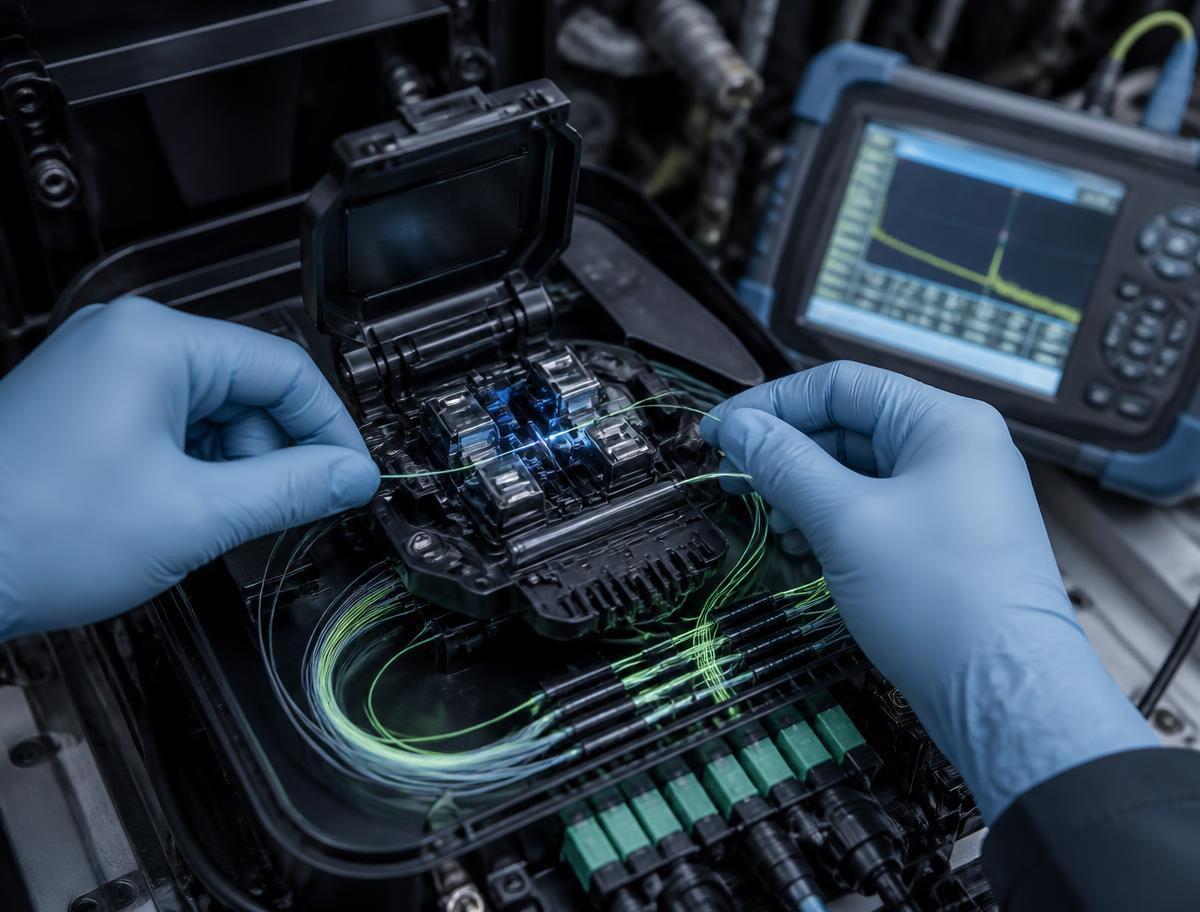
We use multi- and single-mode fusion splicing, which creates a permanent connection between two or more optical fibers and delivers lower loss than mechanical splicing methods. Every splice is followed by bi-directional testing to confirm the result, and closures, trays and cabinets are labeled and documented so your operations team inherits a network they can troubleshoot years from now.
- Multi- and single-mode fusion splicing for permanent, low-loss connections
- Bi-directional OTDR and light-source/power-meter certification
- Loose-tube, ribbon and micro-duct cable placement, pulling and jetting
- Cabinet, closure and tray build-out with consistent labeling standards
- As-built documentation and test result packages at turnover
- Emergency locate, splice and restoration for cut or damaged routes
Capabilities
Scopes we perform in-house
Fiber Optic Cable Installation
Placement, pulling and blowing of loose-tube, ribbon and micro-duct fiber cable.
Fiber Optic Cable Splicing
Multi- and single-mode fusion splicing for permanent, low-loss connections between fibers.
Bi-Directional Testing
OTDR and light-source/power-meter certification in both directions, with documented results.
Fiber Management
Cabinet, closure and tray build-out with labeling and as-built records your operators can use.
Fiber Optic Cable Repair
Emergency locate, splice and restore work to bring cut or damaged routes back into service.
Safety & qualifications
Safety and qualifications
Work zones are planned and staffed by credentialed people, and the traffic control that protects them is ours — not a subcontractor's schedule.
Field supervisors OSHA 30 trained
Every field supervisor has completed OSHA 30 training, so hazard recognition and daily job briefings come from the person running the crew.
All crew leads hold Intermediate traffic-control credentials
Crew leads carry Intermediate traffic-control cards, so lane closures and work-zone setups are led by credentialed personnel.
In-house traffic control
We maintain our own traffic-control capability instead of waiting on a third party, which keeps work zones compliant and schedules intact.
VDOT approved
Expert Telecom is approved by the Virginia Department of Transportation for work within its rights-of-way.
Ready to talk about your next build?
Send us the scope, route miles and schedule. We will get an estimator on it and respond with a plan, not a placeholder.